Serving Piqua, OH and surrounding areas. (937) 381-6505
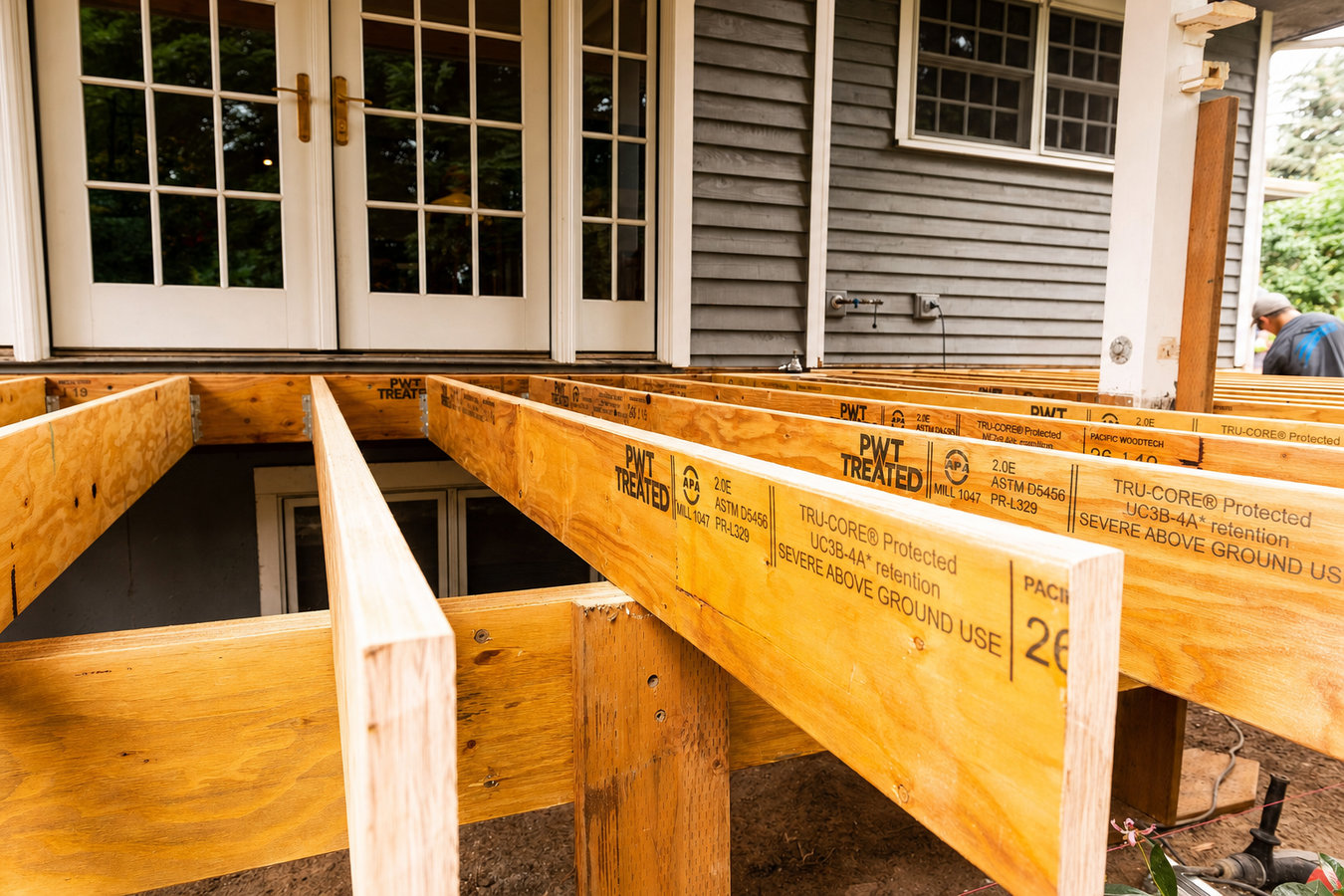
Want a new deck without the composite price tag? Pressure-treated wood is proven, durable, and cost-effective - when it is built on footings that actually survive Piqua winters.
Pressure-treated wood deck construction in Piqua means building a deck from lumber that has been treated under pressure with preservatives that resist rot, insects, and moisture - most residential decks take a crew of two to three workers about two to four days to complete once materials and footings are in place. It is the most common decking material in the Midwest because it balances cost, durability, and workability well. If you are weighing wood against composite, take a look at our cedar wood deck construction page for a naturally rot-resistant alternative.
Piqua Deck & Fence has been building decks in Miami County since 2020, and we pull every permit through the City of Piqua before the first board is cut. A permit means a city inspector reviews your footing depth before concrete is poured and signs off on the finished deck - that inspection protects you structurally and legally, especially when it is time to sell your home.
If certain spots on your deck give slightly under your weight, the wood has started to rot from the inside out. This is common on decks in Piqua older than 15 years, where Ohio's freeze-thaw cycles have worked moisture deep into the wood grain. A deck that feels soft in multiple spots has usually passed the point where repairs make financial sense.
Stand back and look at your deck from the yard. If posts are not straight up and down, or if a gap has opened between the ledger board and your house's siding, the structure has shifted. In Piqua, this often happens when footings were not dug deep enough to survive repeated freeze-thaw cycles.
Many Piqua homes built in the mid-20th century have back doors that lead to a small concrete stoop or a drop straight into the yard. If you want a proper outdoor space for grilling or entertaining, that lack of a real deck is the clearest sign one would improve your daily life.
Grab your deck railing and give it a firm push. If it moves, the connection has loosened - possibly from wood shrinkage, fastener corrosion, or post rot at the base. Loose railings and wide gaps between balusters are safety issues that Ohio's building code addresses for good reason, and an older deck that does not meet current standards is worth replacing.
Every deck we build in pressure-treated wood starts with footings dug to the correct depth for Miami County's frost line, then a solid frame of posts, beams, and joists sized correctly for the span. Decking boards go on top, followed by railings and stairs if your design includes them. We also offer cedar wood deck construction for homeowners who want a natural wood look with less maintenance, and our deck staining and sealing service can protect and finish your pressure-treated deck once it has cured.
From a simple ground-level platform to an elevated deck on a two-story home, we design to your yard, your budget, and your timeline. Every project includes a written estimate up front, permit handling, and a final walkthrough after the city inspector signs off.
Ideal for flat Piqua lots where you want a simple, affordable outdoor platform close to grade.
Suited to homes where the back door exits well above yard level and you need a set of steps down.
Required by Ohio code for any deck surface 30 inches or more above grade, and a smart addition on any elevated platform.
Piqua sits in Miami County in west-central Ohio, where the ground regularly freezes to around 36 inches and then thaws - repeatedly, every winter. That cycle is the main reason footing depth matters so much here. A pressure-treated deck built on correctly dug footings will stay level and solid through Ohio winters for 15 to 25 years with basic upkeep. Homeowners in Sidney, OH and across the region have seen firsthand what happens to decks built on shallow footings - and proper construction from the start costs less than fixing it later.
Piqua also has a large share of homes built before 1970, and those older homes sometimes have aging rim joists at the point where a deck attaches to the house. That connection carries a significant share of the deck's weight, and attaching a new deck to compromised framing is one of the most common causes of deck failures. We inspect that framing before finalizing any design - it is a normal step on older homes in cities like Piqua, and across nearby communities such as Urbana, OH. The American Wood Council's Deck Construction Guide outlines exactly why ledger connections and footing depth are the two structural details that matter most - and we follow those standards on every build.
When you reach out, we ask a few basic questions about size, location, and any existing structure to remove. We are not a high-pressure sales operation - just figuring out whether we can help. Expect a reply within 1 business day.
We come to your home, walk the area, and take measurements. We look at how your house is framed and check the grade of your yard. You get a written estimate with a basic drawing - no obligation, and this is the right time to ask about permits and timeline.
We submit the permit application to the City of Piqua's Building Department before any work begins. Permit approval for a straightforward residential deck typically takes one to two weeks. A reputable contractor handles this for you - you should not have to navigate city hall on your own.
Footing holes go in first, dug to below the frost line - often three feet or more in Piqua. The inspector checks footings before concrete is poured. Once framing and decking are complete, a final city inspection signs off and we walk you through the finished deck.
We respond within 1 business day. No obligation - just a straight conversation about what you want and what it will cost. After you submit the form, someone from our office will call to schedule a free on-site estimate at a time that works for you.
(937) 381-6505Every footing we pour goes below the local frost line for Miami County - around 36 inches - so your deck stays level through years of hard winters. A deck built on shallow footings will start shifting within a few seasons, and we do not build decks that shift.
We handle the City of Piqua permit application for every project. The permit is filed in your name so it shows up correctly when you sell. An unpermitted deck can cost you thousands at closing - ours never will.
Piqua has a large share of homes built before 1970, and aging rim joists at the deck attachment point are a real issue here. We inspect that framing before finalizing any design. A deck attached to a compromised rim joist is one of the most common causes of deck failures, and we catch it before it becomes your problem.
You get a written estimate covering materials, labor, and permit fees before you commit to anything. If something unexpected comes up - like finding that your rim joist needs reinforcement - we tell you the cost before doing the work, not after.
Ohio's building code - administered through the Ohio Department of Commerce - sets specific requirements for railing height, baluster spacing, and footing depth that protect your family and your investment. We build to those standards on every project, and the city inspection at the end of each job is the independent confirmation that we did it right.
Cedar offers a naturally rot-resistant wood option with a warmer grain look than pressure-treated lumber.
Learn MoreOnce your pressure-treated deck has dried out, professional staining and sealing extends its life and keeps it looking sharp.
Learn MoreSpring and early summer slots fill up fast in Piqua - reach out now so we can lock in your timeline before the season gets away from you.